


Publish date: 2026-07-15
Both are advanced ceramics — so why do some equipment components last over a year while others wear out, crack, or fail within weeks? Why do alumina, zirconia, and silicon carbide parts that look similar on the outside deliver such different lifespans and stability in operation?
This is a common pitfall for equipment engineers and procurement professionals: choosing the wrong material can lead to rapid wear, cracking, corrosion, unplanned downtime, and higher replacement costs. Among the three mainstream structural ceramics — silicon carbide, alumina, and zirconia — there is no absolute "best," only the optimal choice for a given set of operating conditions. This article breaks down the real differences, strengths, weaknesses, and application scenarios of each material to help you make the right selection.
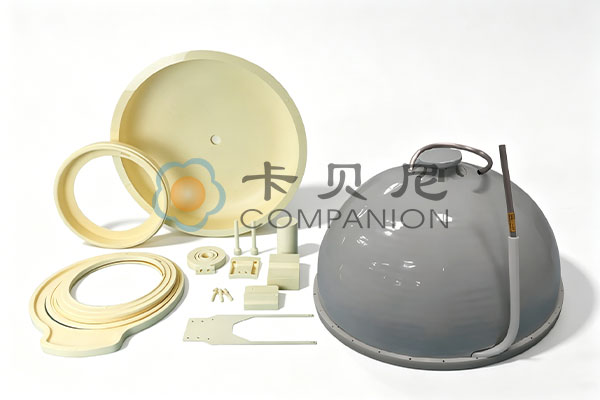
1. Alumina (Al₂O₃) Ceramics
Strengths: Low cost, stable batch production, good electrical insulation, oxidation resistance, easy machinability, short lead times. The most widely used general-purpose structural ceramic in the industry.
Weaknesses: High brittleness, poor impact resistance, moderate wear resistance, limited high-temperature capability.
 |
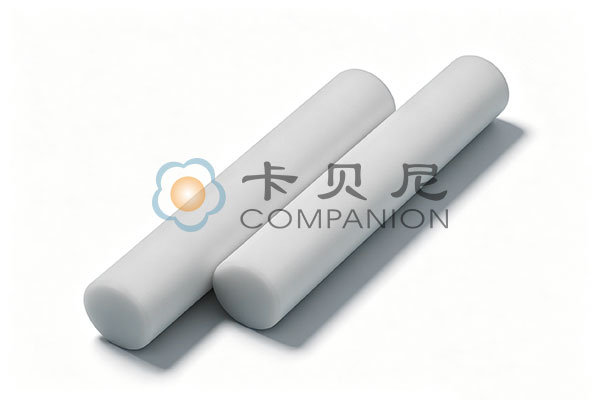
2. Zirconia (ZrO₂) Ceramics
Strengths: High fracture toughness, resistance to chipping and cracking, excellent surface finish via polishing, low friction coefficient, long wear life at room temperature, outstanding sealing performance.
Weaknesses: Risk of phase-transformation aging under prolonged high temperatures, limited resistance to certain media such as hydrofluoric acid, and greater difficulty in forming large components.
 |
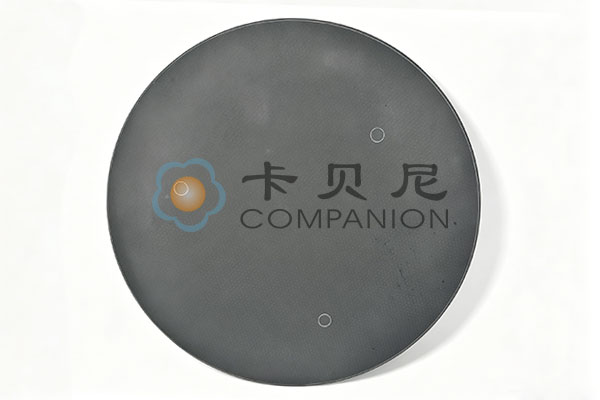
3. Silicon Carbide (SiC) Ceramics
Strengths: Very high hardness and wear resistance, high thermal conductivity, high-temperature capability, thermal shock resistance, strong corrosion resistance, stable dimensional accuracy, and no deformation at elevated temperatures. SiC performs well in high-temperature stability, thermal conductivity, wear resistance, and tolerance to most corrosive environments, though specific performance depends on material purity, sintering process, and operating conditions.
Weaknesses: Higher cost, greater machining difficulty, and longer production lead times for complex-shaped parts.
 |
Core Performance Comparison — Three Structural Ceramics
| Property | SiC | Al₂O₃ | ZrO₂ |
| Hardness / Wear Resistance | Very High | Moderate | Good |
| Thermal Conductivity | High | Low | Low |
| Thermal Shock Resistance | Excellent | Moderate | Good |
| Fracture Toughness | Moderate | Moderate | Very High |
| Cost | High | Low | Moderate |
| Best-Suited Conditions | Wear, high-temperature heat transfer | General-purpose, cost-effective applications | High impact resistance |
1. Alumina Ceramics: General-Purpose Conditions
Suitable for: Semiconductor insulating rings, ceramic showerheads, electronic insulation components, ceramic substrates, insulating posts, general-purpose wear sleeves, textile ceramics, conventional equipment positioning structures, and low-voltage electrical components.
Not suitable for: High-speed wear, impact, high-temperature, or highly corrosive environments.
2. Zirconia Ceramics: Room-Temperature Wear and Impact Resistance
Suitable for: Ceramic valve cores and seats, ceramic bearings, fluid control components, miniature wear-resistant parts, automotive sensor ceramics, medical device structural components, medical implants, and reciprocating wear components.
Not suitable for: Prolonged high-temperature thermal cycling or highly corrosive chemical processing environments.
3. Silicon Carbide Ceramics: Extreme Conditions
Suitable for: Electronic component carriers, ceramic polishing discs, vacuum equipment structural parts, chemical-resistant components, high-temperature furnace assemblies, new energy high-temperature wear parts, and heat-exchange / heat-dissipation ceramics.
Not suitable for: Budget-constrained, conventional room-temperature applications where its performance would be excessive and cost unnecessarily high.
Choosing the right ceramic material requires a clear understanding of your primary engineering goals and budget. Below is a selection guide based on different core requirements:
1. If your top priority is very high hardness and wear resistance
Silicon carbide is the preferred choice. Its Mohs hardness approaches that of diamond, making it perform well under high-speed friction and particle-laden media conditions. It is suitable for high-precision ceramic polishing discs and wear-resistant mechanical seals.
2. If your top priority is impact resistance and crack prevention
Zirconia is the more suitable option. It has the highest fracture toughness of the three materials and can withstand minor impacts and vibration, whereas silicon carbide or alumina may be prone to chipping under such conditions due to their brittleness.
3. If your top priority is high-temperature performance or efficient heat dissipation
Silicon carbide again stands out. It combines very high temperature capability with high thermal conductivity, making it an excellent solution for heat exchangers, electronic engineering equipment components, and high-temperature furnace support structures.
4. If your top priority is general-purpose electrical insulation with good mechanical strength, and cost is a concern
Alumina is the commonly chosen option. It offers balanced performance at a relatively low price, making it a practical choice for high-volume applications such as electronic substrates and insulation components.
5. If your top priority is wear resistance at low-to-moderate temperatures with a moderate budget
Zirconia offers a good balance between room-temperature wear resistance and impact resistance, making it a reliable choice for precision small parts such as valve cores and bearings.
The key to selecting the right material is matching specific properties with your application requirements.
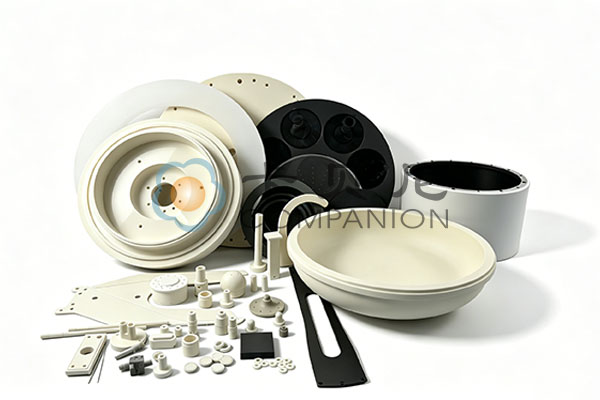
Choosing the right material directly determines the service life and operational stability of your equipment components. Companion's expert team is skilled at providing targeted material recommendations based on your specific operating conditions — temperature, corrosion, mechanical stress, and wear mechanisms — and budget. Whether you need alumina, zirconia, or silicon carbide ceramics, Companion supports custom manufacturing from drawings, non-standard complex-part machining, high-precision polishing, small-batch prototyping, and volume production.
What we offer:
• Professional material selection: Receive personalized recommendations on which advanced ceramic material fits your process requirements.
• Full-chain custom manufacturing: From powder formulation, R&D and design, forming and sintering, to precision machining — Companion's in-house production line ensures rigorous quality and delivery control to keep your project on track.
• Lower total cost: Choosing the right material reduces equipment downtime, extends component life, and lowers replacement costs.
Do not let material issues delay your project timeline. Contact Companion's technical team today for an industrial ceramic selection solution tailored to your operating conditions.
• High-Purity, High-Temperature SiC Discs for Electronic Engineering Equipment
• Wear-Resistant SiC Robot Arms for Vacuum Chamber Transfer
• High-Hardness, Wear-Resistant, High-Temperature Alumina Ceramic Rods
• Alumina Vacuum Chucks for Adsorption, Handling, and Fixing
• Biocompatible Zirconia Structural Components for Life Sciences
 |
Q1: How do I choose among the three materials when ESD-safe or semi-conductive ceramics are needed?
Silicon carbide is recommended. All three materials — alumina, zirconia, and silicon carbide — can be modified to achieve ESD-safe or semi-conductive properties. However, in terms of ease of implementation and stability, silicon carbide allows resistivity tuning through formulation adjustments, making it easier to achieve anti-static and semi-conductive characteristics. SiC is the preferred choice for ESD-safe wear components.
Q2: Which ceramic should I choose for equipment that requires uniform heating and precise temperature control?
Silicon carbide is recommended. SiC conducts heat quickly and evenly, preventing localized hot spots and temperature-induced deformation, helping maintain overall temperature uniformity across the equipment. Alumina conducts heat slowly and is prone to localized heat buildup; zirconia has low thermal conductivity and is not conducive to rapid, uniform heat transfer.
Q3: Is there a significant difference in machining difficulty for complex custom-shaped parts among the three ceramics?
Machining difficulty ranking: SiC > ZrO₂ > Al₂O₃
Alumina has a uniform microstructure, is easy to cut and form, and presents relatively low difficulty for complex structures, irregular slots, and multi-hole machining, with good batch production stability. Zirconia has high toughness and resists edge chipping, making it suitable for miniature complex precision structures, though machining takes longer than alumina. Silicon carbide has high hardness and brittleness, requiring diamond tooling for grinding; complex parts with irregular shapes, deep cavities, and thin walls are more difficult and process-intensive to machine.
Q4: Do you support ceramic component sample testing and small-batch trial production?
A qualified precision ceramic manufacturer should support sample prototyping, small-batch testing, and volume production, working with the customer throughout the process to validate and optimize for actual operating conditions. Companion provides sample testing services with different materials based on the customer's actual operating conditions, and supports small-batch prototyping, precision testing, and in-situ trials for non-standard custom parts. With our in-house pilot production line, we collaborate with customers on early-stage condition validation and performance testing, iteratively optimizing product structure and processes. Verifying material suitability through physical samples effectively mitigates the selection risk of going straight to volume production, reducing the customer's trial-and-error cost.
Q5: If an existing part is made of metal, plastic, or another material and I want to switch to ceramic, how do I determine suitability?
Material substitution does not require blind trial and error. Companion has a professional technical engineering team that performs an in-depth analysis of the customer's actual equipment operating conditions — covering working temperature, wear mechanisms, corrosive media, mechanical loading, and assembly precision — and carefully compares the performance differences across materials. Drawing on extensive hands-on experience, we identify suitable, cost-effective, long-service-life solutions rather than making generic or indiscriminate recommendations.
Among the three mainstream engineering ceramics, there is no absolute winner — only the right fit. Choose alumina for cost-effective general-purpose use, zirconia for room-temperature impact and wear resistance, and silicon carbide for high-temperature, highly corrosive, and high-wear conditions.
When selecting a material, do not look only at unit price. Take a holistic view that factors in temperature, corrosion, mechanical stress, and wear mechanisms. Choosing the right material can directly improve equipment stability and significantly reduce long-term operating and maintenance costs. If you are unsure which material fits your conditions, consult Companion anytime for a professional ceramic selection solution.


 LANGUAGE
 WhatsApp


